
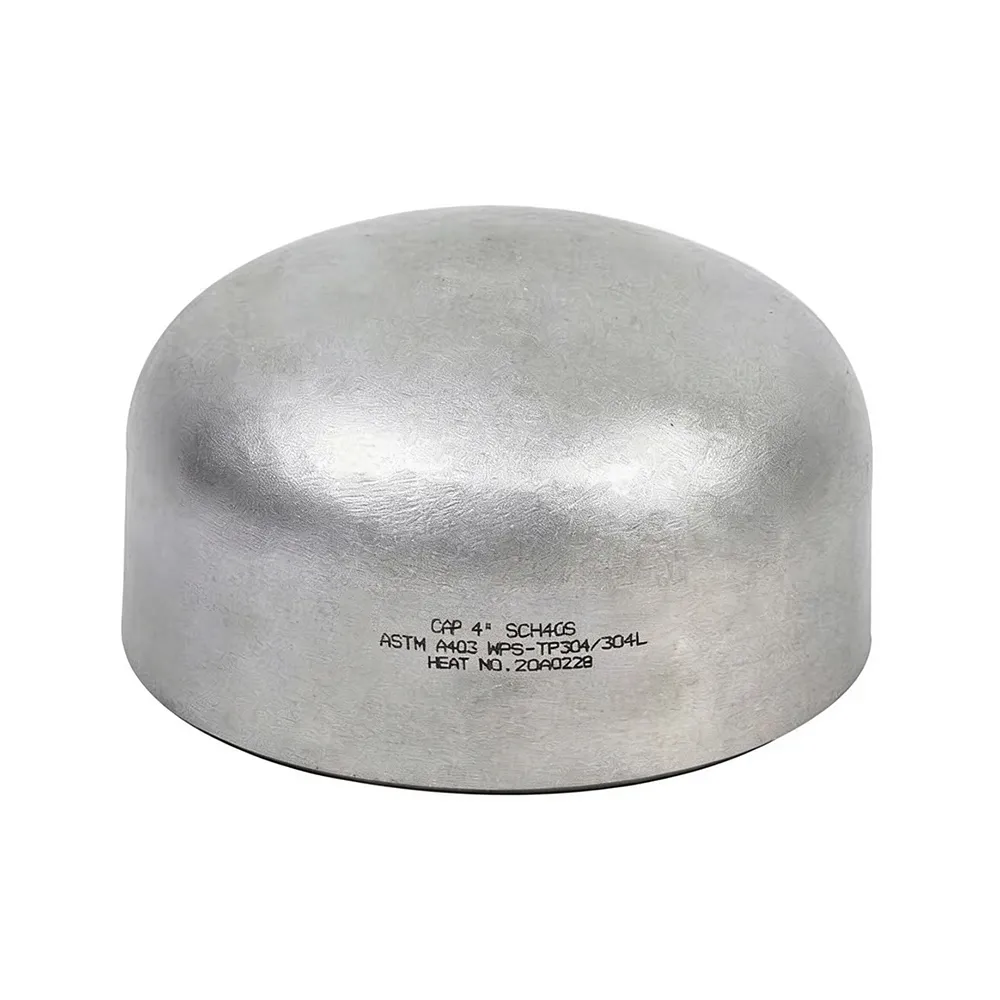
Pipe Cap
Pipe Cap
Pipeline cap is an end sealing fitting to close pipe terminals. It can be elliptical, dished or flat type. With good pressure-bearing capacity and reliable sealing performance, pipeline caps can be made of various materials and manufactured to ASME B16.9, EN 10253 and GB/T 12459.
- Category
- Pipe Cap
- Specification
- Standard cap / ASME B16.9 / seamless
- Product code
- CAP-STD
Product details
What a Pipe Cap Is
Pipeline cap is an end sealing fitting to close pipe terminals. Also referred to as an end cap or head, it is a terminal fitting used to seal pipe ends and block medium flow.
It can be elliptical, dished or flat type. With good pressure-bearing capacity and reliable sealing performance, pipeline caps can be made of various materials and manufactured to ASME B16.9, EN 10253 and GB/T 12459.
Pipe Cap vs. Blind Flange: When to Use Which
A pipe cap and a blind flange both serve to close off a pipe terminal, block medium flow and protect the pipe end. They differ in how they connect to the pipe, and that difference drives the usage scenario:
- Pipe cap — a fitting that closes the pipe terminal itself; butt welding is the main connection method, and small-bore caps may adopt socket weld or threaded ends.
- Blind flange — a bolted closure applied at a flanged pipe end, typically chosen where the end must be opened or inspected by unbolting.
The construction of the piping line therefore decides the selection: a cap is welded directly onto the pipe end, so it suits permanent end sealing of a run, while a bolted blind flange suits terminals that are meant to be reopened.
With good pressure-bearing capacity and reliable sealing performance, a pipe cap provides dependable end sealing for pressure piping projects.
Shape, Forming and Connection
Pipeline caps can be classified by shape into elliptical caps, dished caps and flat caps.
Forming processes include seamless pressing, plate welding and forging. Butt welding is the main connection method; small-bore caps may adopt socket weld or threaded ends.
Materials and Applications
Common materials include carbon steel, stainless steel and alloy steel. It is widely used in oil & gas, chemical, power, municipal and other pressure piping projects.
Advantages
- Reliable end sealing
- Excellent mechanical performance
- Standardized specifications
- Diverse material options
- Simple installation
- Pipe end protection
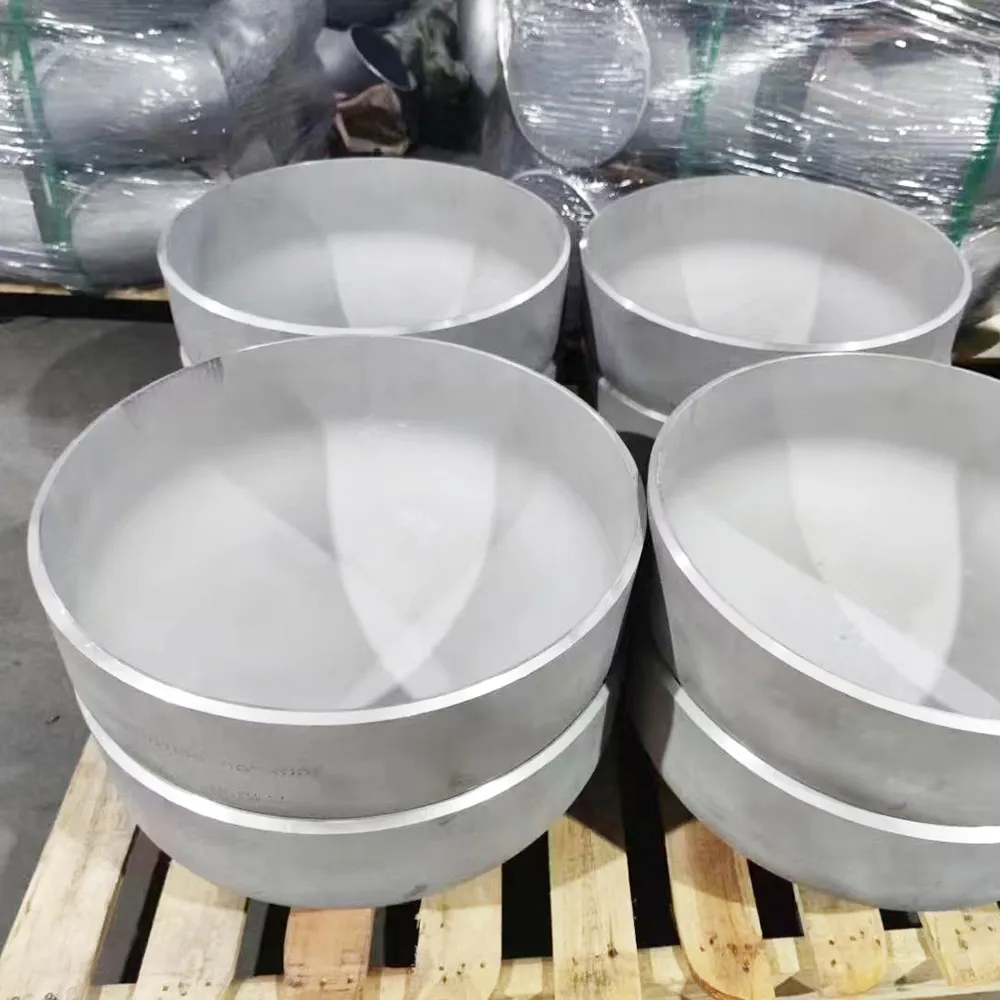
Standards the Pipe Cap Is Manufactured To
The cap family is produced against a set of international and national standards, covering both butt-weld fittings and small-bore forged fittings.
| Standard | Scope |
|---|---|
| ASME B16.9 | Factory-made wrought steel butt-welding fittings (main international standard for butt-weld caps) |
| ASME B16.11 | Socket-welded and threaded forged steel fittings (small-bore forged caps) |
| EN 10253 | European standard for butt-weld fittings |
| DIN 2617 | German standard for steel caps |
| JIS B2312 | Japanese standard for steel butt-weld fittings |
| GB/T 12459 | Steel butt-weld seamless fittings |
| GB/T 13401 | Steel plate butt-weld fittings |
Material specification standards: ASTM A234 WPB for carbon steel fittings; ASTM A403 for stainless steel fittings.